



dot NET

Exning.Net is a website developed by residents of Exning Village
All information and photographs are ©LAPOLLO Systems unless otherwise attributed. Comments & Queries to info@exning.net
Please note the site is under development and new pages will be added from time to time and formats may change.
Please see the “Small print”
Whilst every attempt is made to ensure accuracy of the information on this site, LAPOLLO Systems cannot be held responsible for any loss of time or money due to use of the information. This also true of sites with links from Exning.Net.
Walks
Detailed routes for both options are now available. These include elevations (showing where the walk rises or falls) and details of “junctions”.
These are available from Mark Haworth:
Phone: 07932 160009
Email to mhaworth50@hotmail.com
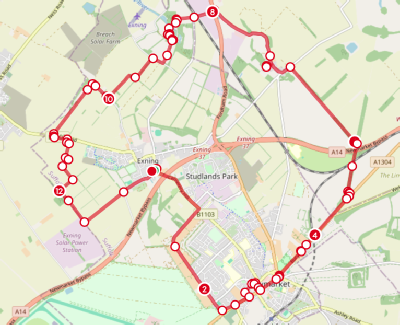
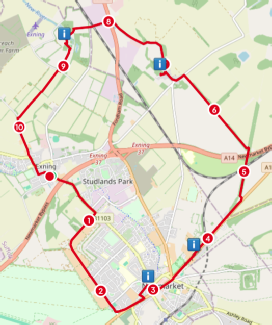
Long route: 13.56 miles
Short route: 10.82 miles
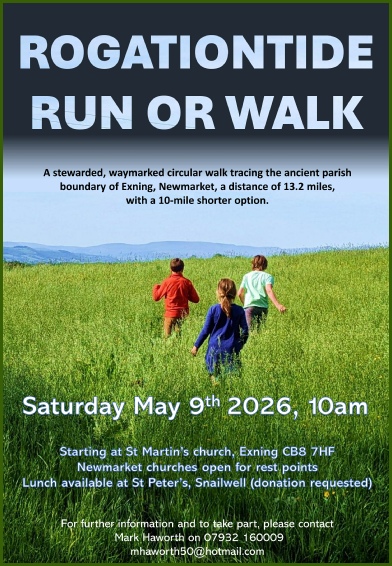
Here is an explanation about the historical basis.
Why that route?
Why at this time of the year?
What's it got to do with the tradition of "Beating the Bounds"?
Long before maps were common, parish communities would gather on Ascension Day or during Rogation Week to walk the boundaries of their parish. Led by the parish priest, churchwardens, and other officials, the group—often accompanied by local boys as future witnesses—would strike boundary markers with birch or willow sticks.
This annual ritual served a practical purpose: in an age without reliable maps, it ensured that knowledge of the parish limits was passed down through generations. Clear memory of these boundaries helped prevent disputes over responsibilities such as chancel repair liabilities or the right to burial within the churchyard.
The walk also had a spiritual dimension. The clergy would rogare (Latin for “to ask”) for God’s blessing on the parish lands and the coming harvest.
This walk is around the boundary of the ancient Parish of Exning which includes parts of today’s parishes of Snailwell, St Agnes and St Mary’s